
Seamless is a speculative app developed in collaboration with IBM and the Student Service Design Challenge (SSDC) as part of the University of Waterloo's GBDA capstone program.
Through mixed-methods research, our team identified an addressable painpoint: frustration and anxiety during the online fashion retail experience related to fit confidence.
The app aims to address this issue through a measurement-driven virtual try-on platform that converts user body data into a personalized 3D avatar for inclusive, accurate online clothing fit.
Throughout the project, I led qualitative research, owned branding and marketing, and provided support for product design.


Fashion retail has long been built around a narrow conception of the body, and the data backs it up. Our field study, survey, and secondary research all pointed to the same conclusion: the industry is leaving a significant portion of its consumer base behind, both in representation and in fit.


Fit-related issues drive return rates of 20–40% in online fashion, and 77% of Canadian shoppers have returned clothing due to poor fit. The virtual fitting room market is projected to double from $7.05B in 2025 to over $14B by 2029 — yet existing solutions fall short.
Competitor analysis revealed four players in adjacent spaces, each with fundamental limitations: insufficient body measurement inputs, in-store-only deployment, a B2B rather than consumer focus, or AI imagery that sacrifices accuracy for convenience.
The gap for a consumer-first, mobile-native, inclusive virtual try-on platform was wide open. Seamless projected a serviceable user base of 612K–1.2M within two years, and a breakeven threshold of just 180 monthly customers.
To design a winning service, we went deep. Our research spanned a structured field study across nine major fashion retailers, an online survey with 47 respondents, five in-depth user interviews, and extensive secondary research across market reports, consumer behavior studies, and stakeholder analysis.

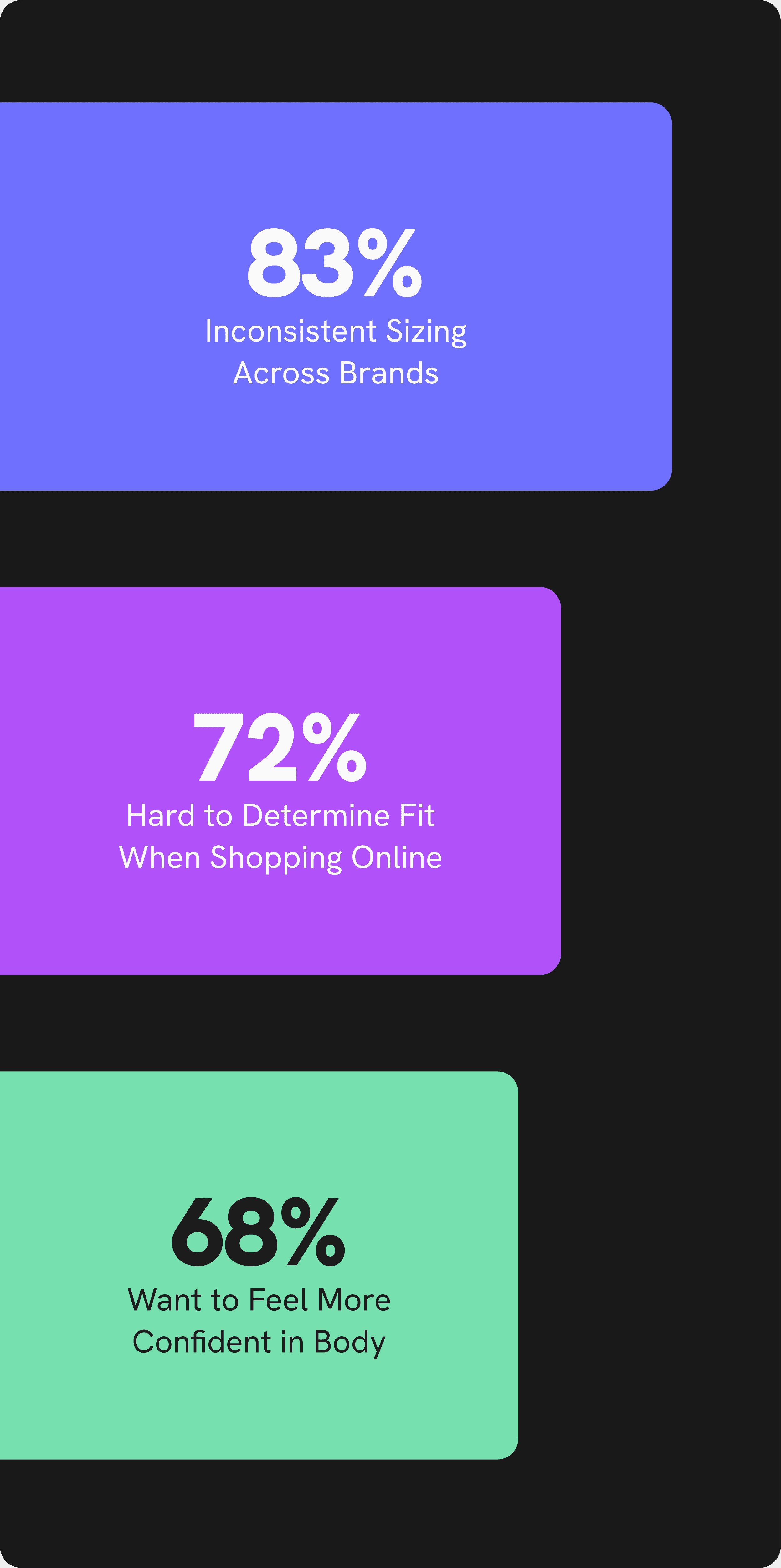
The survey told one story: 83% of respondents struggled with inconsistent sizing across brands, 72% couldn't determine how clothes would fit online, and 68% wished they felt more confident in their body type. But the interviews told a more nuanced one that reshaped our problem space.


Initially, we assumed that poor body representation was the central pain point.
However, interviewees reported although representation was an annoyance, they would actually tune out mannequins and models entirely when shopping, having learned over time that these representations bore no useful relationship to how clothes might look on them.
What they actually needed in their shopping experience was reliable fit accuracy — the ability to trust, before buying, that something would actually fit.
This insight fundamentally reframed our problem and sharpened our solution: rather than building a platform about representation, we built one about fit confidence.


The Seamless brand was designed to feel modern yet approachable to speak to our primary audience of younger Millennials and Gen Z, who expect visual polish for digital-native products but respond to brands that feel human and accessible.
To emphasize the human element, the brand uses a personable 2D illustration system that makes every experience feel playful, warm, and easy to trust. This signals that Seamless is a platform anyone can join, regardless of how they look or their size.
Mobile app


Organic social media
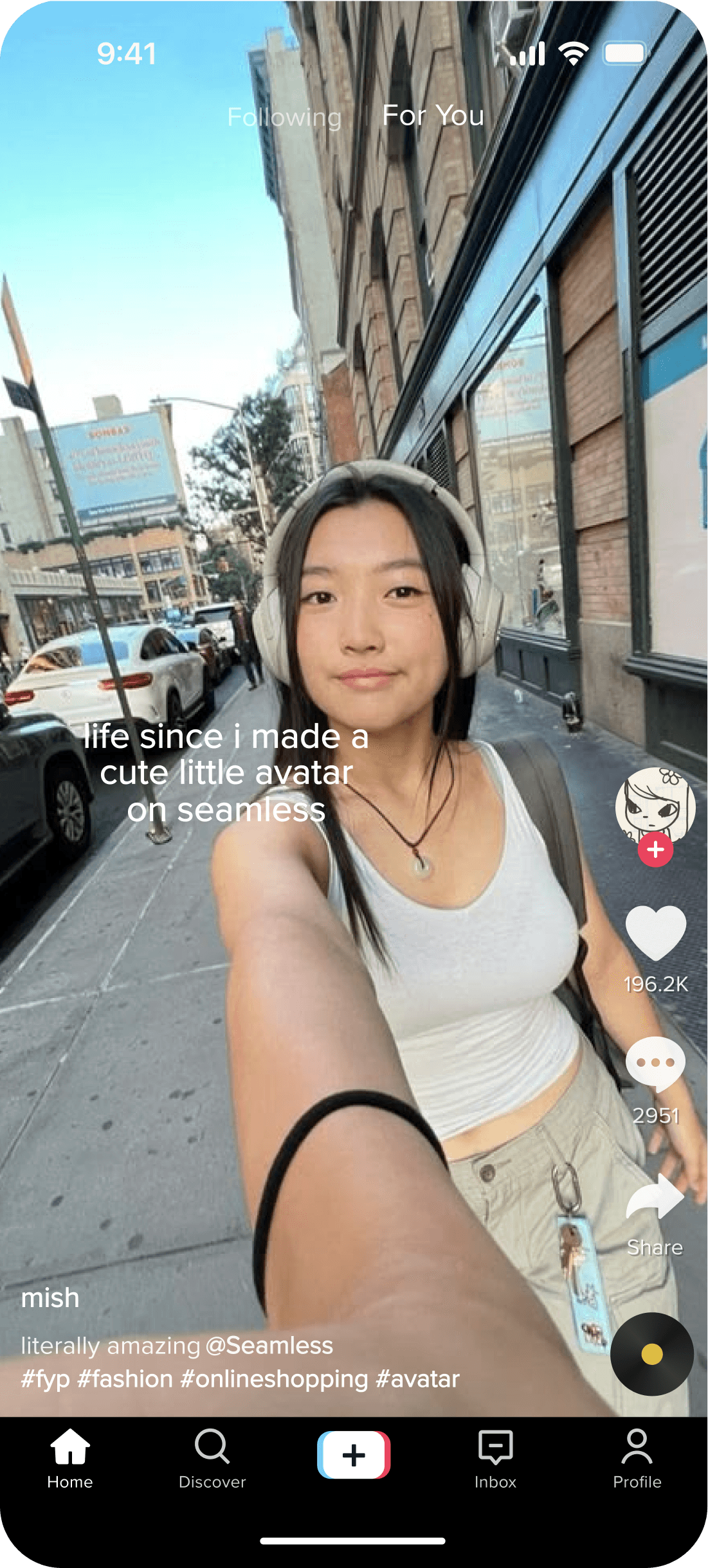


ugc paid ads


We built Seamless out as a complete go-to-market concept. I designed and ideated a conceptual marketing mix for the Toronto launch strategy: organic social media content, UGC content, and a pop-up event where users get measured in person and build their avatars, turning the digital product into a physical brand experience.
